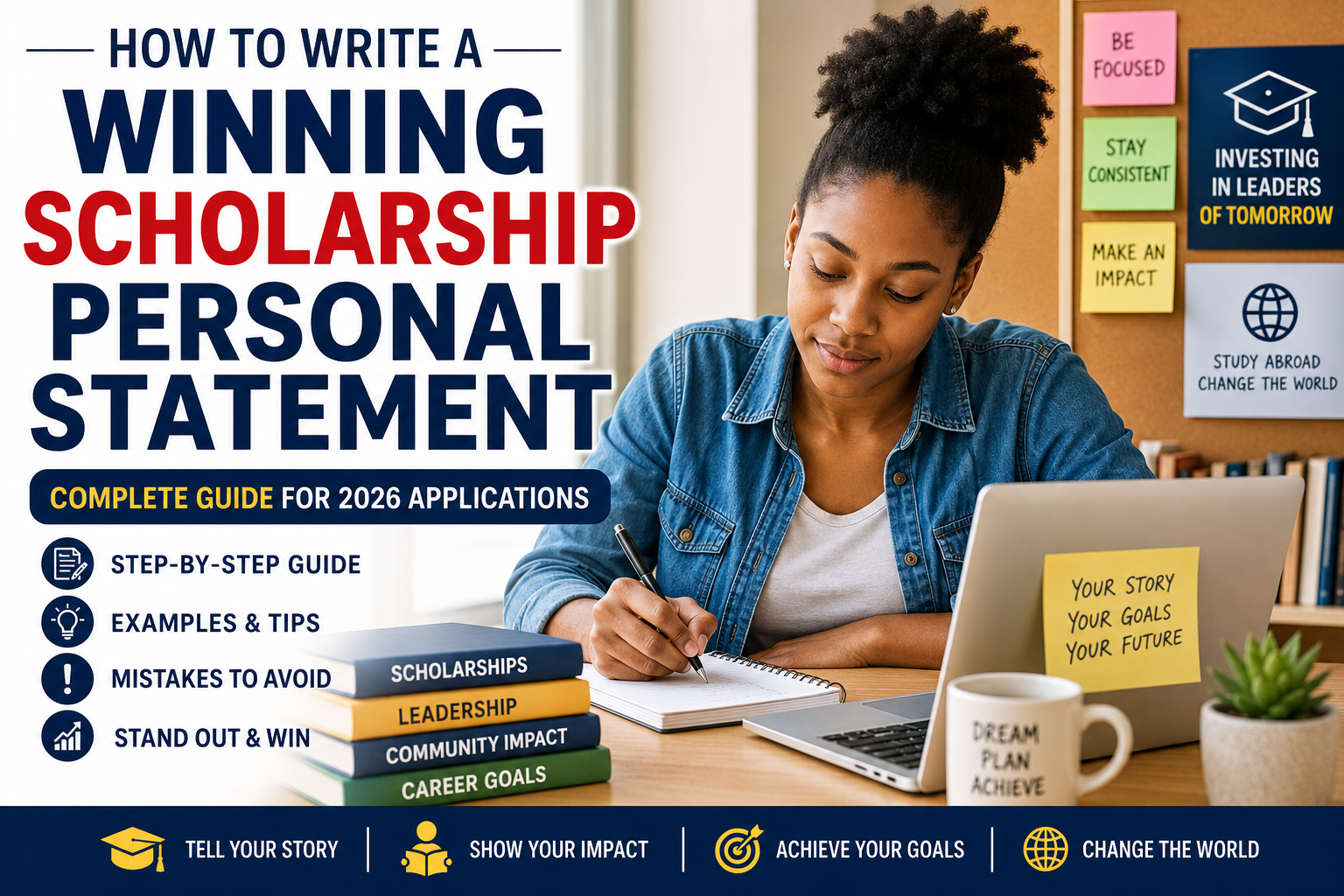
How to Write a Winning Scholarship Personal Statement
HOW TO WRITE A WINNING SCOLARSHIP PERSONAL STATEMENT.
Applying for scholarships can be highly competitive, especially for fully funded international opportunities like Chevening, Erasmus Mundus, DAAD, Rhodes, Gates Cambridge, and MEXT scholarships. One of the most important parts of most scholarship applications is the personal statement. A strong scholarship personal statement can make the difference between being selected or rejected.
Many students have good academic results but still fail to win scholarships because their personal statement is weak, generic, poorly structured, or fails to show their real story and goals. Scholarship providers are not only looking for students with good grades — they are looking for future leaders, problem-solvers, community builders, and people who can create positive impact after graduation.
In this guide, you will learn how to write a winning scholarship personal statement for 2026 applications, including the proper structure, examples, mistakes to avoid, and tips that can help Nigerian and African students stand out from thousands of applicants worldwide.
What is a Scholarship Personal Statement?
A scholarship personal statement is an essay written by an applicant explaining who they are, their educational background, achievements, goals, leadership experience, challenges, and why they deserve the scholarship.
This essay helps scholarship committees understand your personality beyond grades and certificates. It gives you the opportunity to explain your story, passion, ambitions, and how the scholarship will help you achieve your future goals.
Most scholarship personal statements range between 500 and 1,500 words depending on the programme requirements.
Why Your Personal Statement is Important
For many international scholarships, thousands of students apply every year. Many applicants may have similar grades or qualifications. Your personal statement is what helps distinguish you from others.
A strong personal statement can:
- Show your leadership potential
- Explain your career goals clearly
- Demonstrate community impact
- Highlight your achievements
- Show passion and motivation
- Convince selectors that you are a good investment
In many cases, applicants with lower grades but stronger personal statements are selected ahead of applicants with higher grades but weak essays.
Structure of a Winning Scholarship Personal Statement
A good scholarship personal statement should have a clear structure. The best approach is usually:
1. Introduction
Your opening paragraph should immediately capture attention. Introduce yourself briefly and explain your passion, dream, or motivation.
Example:
“I grew up in a rural community in Nigeria where access to quality healthcare was limited. Watching preventable illnesses affect families around me inspired my passion for public health and my desire to create healthcare solutions for underserved communities.”
This type of opening creates emotional connection and immediately shows purpose.
2. Academic Background
Explain your educational journey and academic achievements. Mention your degree, university, certifications, projects, or research work.
You can also mention challenges you overcame during your studies if relevant.
Example points to include:
- Degree and field of study
- Academic awards
- Research interests
- Relevant projects
- Leadership positions in school
- Skills gained
3. Leadership and Community Impact
Most major scholarships are looking for future leaders. Explain how you have contributed to your community, school, workplace, or organisation.
Leadership does not always mean holding big titles. It can include:
- Volunteering
- Mentoring others
- Organising community projects
- Running awareness campaigns
- Starting small initiatives
- Helping students or young people
Provide real examples and measurable impact where possible.
4. Career Goals
Explain your short-term and long-term goals clearly.
Scholarship committees want to know:
- What you want to achieve
- Why the programme matters to your career
- How the scholarship will help you
- How you plan to contribute to society afterward
Your goals should sound realistic, focused, and meaningful.
5. Why You Chose the Scholarship
Explain why you are applying for that particular scholarship and programme.
Mention:
- Specific opportunities offered
- Reputation of the university
- Special programme features
- Alignment with your goals
Avoid generic statements like:
“I want to study abroad because it is better.”
Instead explain specifically how the programme connects to your ambitions.
6. Conclusion
End strongly by summarising your vision, passion, and readiness for the opportunity.
Your conclusion should leave a memorable impression.
Example:
“With the support of this scholarship, I hope to develop innovative public health solutions that improve healthcare access for underserved African communities and contribute meaningfully to sustainable development across the continent.”
Common Mistakes Students Make
Many scholarship applicants make avoidable mistakes that reduce their chances of selection.
1. Using Generic Statements
Avoid copying generic motivational phrases from the internet.
Scholarship committees read thousands of essays and can easily identify copied or AI-generated content without personal touch.
2. Poor Grammar and Spelling
Always proofread your essay carefully. Grammar mistakes make your application look unprofessional.
Use tools like Grammarly to help check errors.
3. Talking Too Much About Childhood
Your story matters, but avoid spending too much time discussing unrelated childhood experiences.
Focus more on your goals, achievements, and future plans.
4. Lack of Structure
Your essay should flow logically with clear paragraphs and transitions.
Avoid writing everything as one long block of text.
5. Exaggerating Achievements
Be honest about your experiences and accomplishments. Scholarship committees may verify information during interviews.
Tips to Make Your Personal Statement Stronger
Be Specific
Instead of saying:
“I want to help people.”
Say:
“I want to improve maternal healthcare access in rural Nigerian communities through affordable healthcare technology.”
Specific goals sound more convincing.
Show Real Passion
Your essay should sound human and genuine. Share experiences that shaped your ambitions.
Use Real Examples
Mention real projects, achievements, volunteer work, internships, leadership roles, or challenges you overcame.
Focus on Impact
Scholarship providers want applicants who will create positive impact after graduation.
Explain how your education will help your community or country.
Keep It Clear and Simple
Avoid using unnecessarily complex English. Clear and direct writing is usually more effective.
Scholarship Personal Statement Sample Opening
Here is a simple example of a strong opening paragraph:
“Growing up in Northern Nigeria, I witnessed how lack of access to quality education limited opportunities for many young people in my community. This experience inspired my commitment to educational development and my ambition to design technology-driven learning solutions that improve access to education across Africa.”
This introduction:
- tells a story
- shows motivation
- introduces career goals
- creates emotional connection
Can You Use AI to Write a Personal Statement?
AI tools can help with:
- grammar correction
- idea generation
- structure improvement
- proofreading
However, you should never copy fully AI-generated essays directly without editing them heavily. Scholarship committees want authentic personal stories and experiences.
Use AI responsibly to improve your writing — not replace your voice.
Final Advice for Nigerian Students
Thousands of Nigerian students apply for international scholarships every year, but only a small number are selected. Your personal statement is your opportunity to stand out.
Do not rush your essay. Start early, edit carefully, and ask trusted mentors or lecturers to review your draft before submission.
A powerful scholarship personal statement combines:
- authenticity
- clarity
- leadership
- vision
- impact
- passion
Remember that scholarship providers are investing in future leaders who can create positive change in their communities and countries.
Related Opportunities
- Chevening Scholarship UK 2026
- Erasmus Mundus Scholarship 2026
- MEXT Scholarship 2027 in Japan
- DAAD Scholarship 2026 for Nigerians
- Rhodes Scholarship 2026
- Gates Cambridge Scholarship 2026
Visit MicRise daily for more scholarship guides, fellowships, internships, grants, and study abroad opportunities for Nigerians and African students.
Want more guides and career tips for Nigerians?
Browse All Guides →